Note: A big thank you to Kim Beall, PharmD. At Nutritional Therapy For IBD, she oversees public education and was the inspiration and leading resource for this post. She was a recent guest on my podcast and discussed tools the organization has created for IBD patients and their families. Watch the podcast here.
-----------------------
I am often asked for help with the dietary approaches for managing Inflammatory Bowel Disease (IBD), focusing on the Mediterranean, IBD-AID, and Specific Carbohydrate Diet (SCD).
Many things go into my answer. I often ask questions to clarify.
Such as, where is your IBD? Is it in the small intestine or large intestine? That matters as to which diet is likely to help the most.
Also, what types of foods do you see yourself eating? What types of foods does your family like? What foods are most important in your culture? Also, which foods do you intuitively know help, and which ones intuitively aggravate?
I do everything in my power to reduce the risk of Avoid/Restrictive Food Intake Disorder, which is very common in IBD. This is much easier said than done for IBD patients who are flaring or if the disease is not controlled. I discuss this topic with Julia Hollenberg, RD, MSN, here.
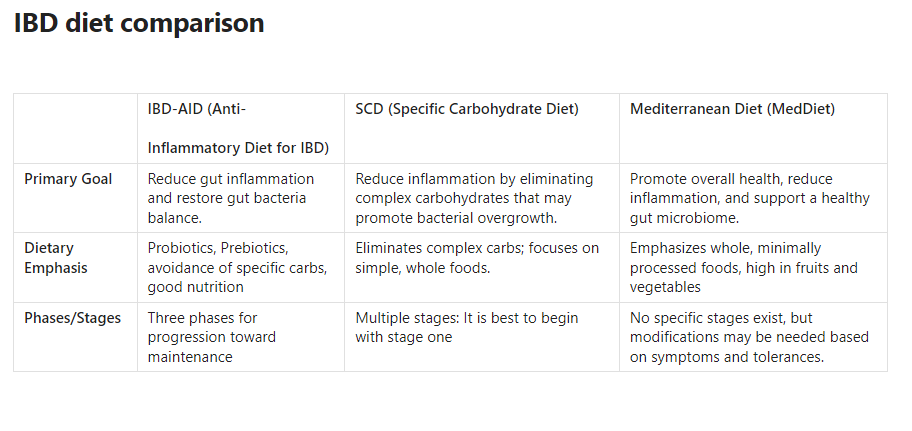
The goal is to understand how these IBD-centric diets can reduce inflammation, manage symptoms, and improve overall health while living with IBD.
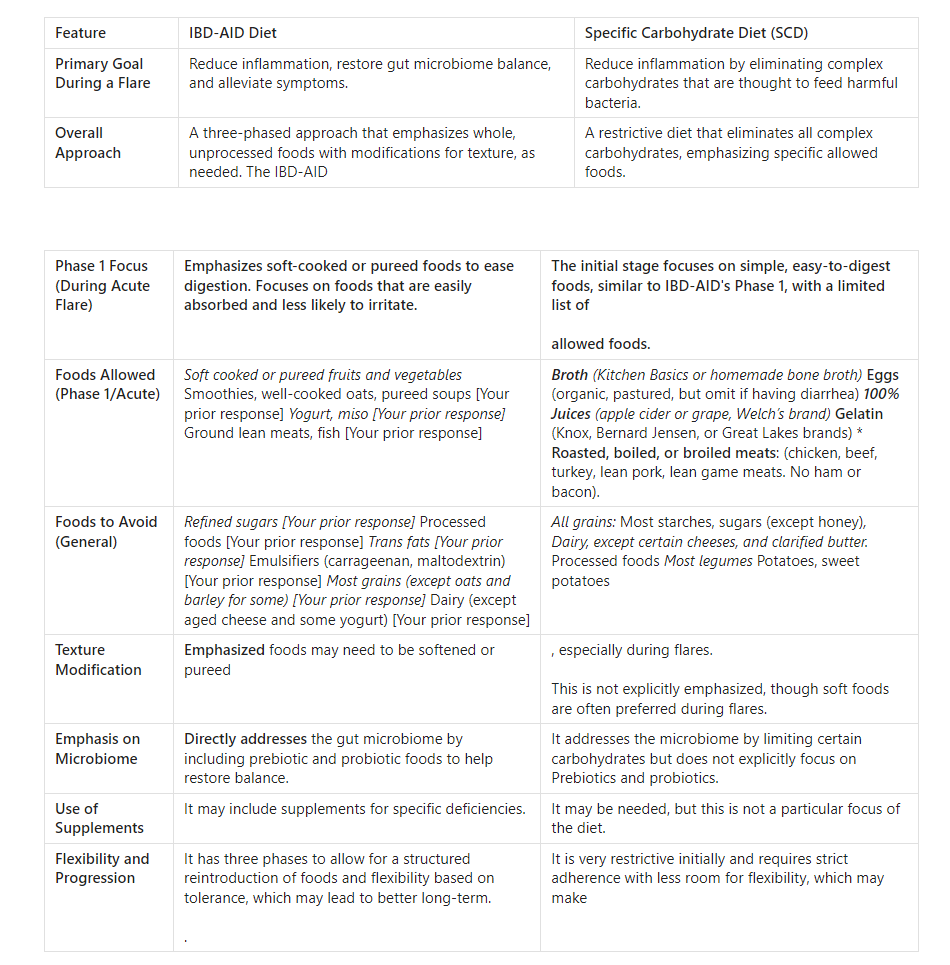
I have selected three diets to compare: IBD-aid, SCD, and Mediterranean. The bottom of this article talks about flare-specific dietary components of IBD-aid and SCD.
Definitions:
Probiotics: Beneficial bacteria that live in the gut and contribute to a healthy microbiome.
Prebiotics: Foods that feed the good bacteria in the gut.
Complex Carbohydrates contain multiple sugar molecules, often higher in fiber and slower to digest. Examples are whole grains.
Monounsaturated Fats: Healthy fats like olive oil, avocados, and nuts.
Ultra-processed Foods: Foods that have undergone extensive processing tend to be high in unhealthy fats, added sugars, and salt.
SCD Yogurt: Prepared uniquely to reduce sugars.Emulsifiers: Food additives that help mix oils and liquids.
It is helpful to go into detail about each of these approaches to understand them in more detail:
IBD-AID Diet
The IBD-AID (Anti-Inflammatory Diet for IBD) is designed to help restore balance to the gut bacteria and reduce inflammation. It has three phases to help patients progress toward maintaining remission. The diet emphasizes probiotics, Prebiotics, avoidance of specific carbohydrates, and good nutrition.
Here are some of the key components of the IBD-AID:
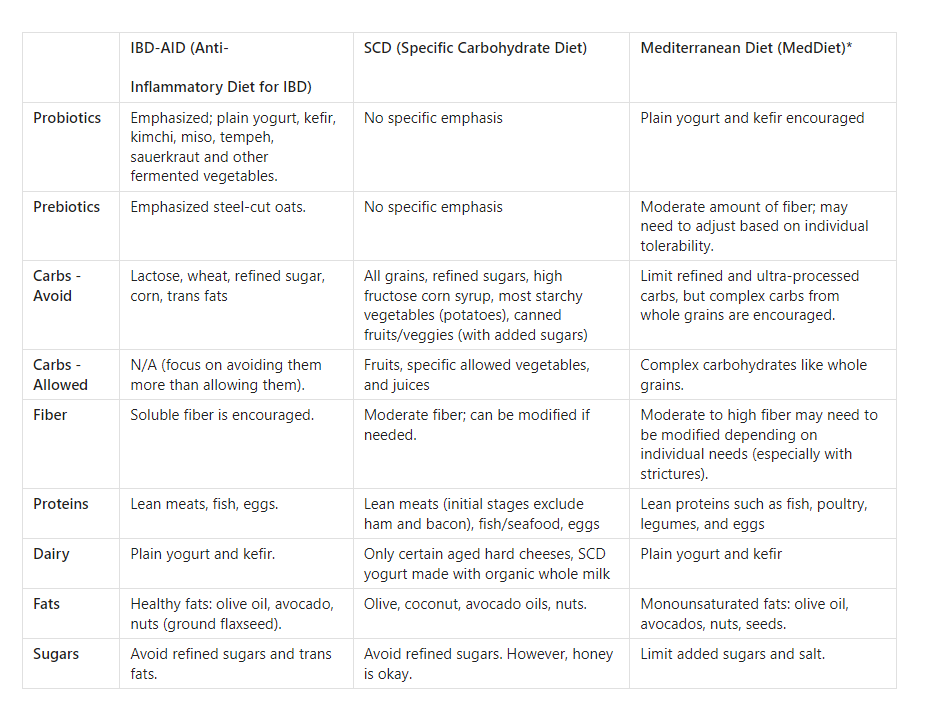
Probiotics: These are fermented foods that contain live bacteria.Examples include
Plain yogurt
Kefir
Kimchi Miso
Tempeh
Sauerkraut
Prebiotics: These foods feed and maintain beneficial gut bacteria, particularly soluble fiber, which also enhances stool consistency and slows gut motility, which can decrease inflammation.
The diet promotes the consumption of steel-cut oats as a source of soluble fiber.
Okay, let's break down the foods that the IBD-AID (Anti-Inflammatory Diet for IBD) generally advises people to avoid.
Carbohydrates to Avoid: The IBD-AID emphasizes avoiding certain carbohydrates that can be pro-inflammatory and disrupt normal gut flora.
These include:
Lactose
Wheat
Refined sugar (sucrose)
Corn
Trans fats are found in store-bought baked goods and foods containing "partially hydrogenated oil."
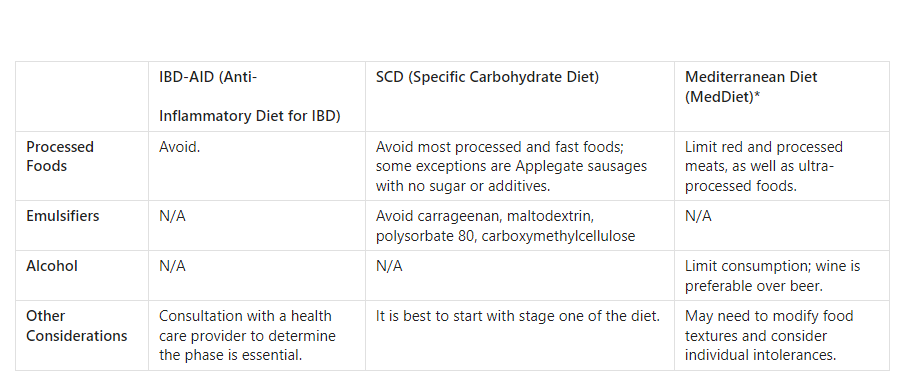
Processed foods and fast food
Good Nutrition: The diet emphasizes fruits, vegetables, lean proteins, and healthy fats.
Eat various fruits and vegetables in a well-tolerated form (blended, pureed, or whole).
Include lean proteins and healthy fats like legumes, nuts, olive oil, avocado, ground flaxseed, fish, eggs, probiotic yogurt, and kefir.
Limit intake of saturated fat to less than 5g per serving. Increase intake of good fats from nuts, avocado, and olive oil.
IBD-AID Phases: The diet has three phases, with Phase 1 being the most restrictive for patients experiencing a flare. The phases are:
Phase 1: Focuses on soft-cooked or pureed foods like smoothies, well-cooked oats, ground flax or chia seeds (if tolerated), pureed soups, pureed vegetables, yogurt, miso, ground lean meats, and fish. This is done when flaring.
Phase 2: Introduces more foods with some fiber, such as soft greens (butter lettuce, cooked collard greens, baby spinach without stems), well-cooked lean meats and poultry, aged cheeses, nut butter, tomatoes, pureed berries with seeds strained out, and foods baked with IBD-AID-friendly flours (bean flour, nut flours).
Phase 3: Allows for a greater variety of foods, such as stir-fried vegetables and meats, shellfish, citrus fruits, and whole beans.
SCD Diet
The Specific Carbohydrate Diet (SCD) is designed to reduce inflammation and promote healing in the gut by eliminating complex carbohydrates that may promote bacterial overgrowth. It is important to note that the diet has several stages, and it is best to start with stage one.
Here is an overview of the foods to include and exclude from the SCD diet:
Foods to Include:
Broth: Specifically, Kitchen Basics brand or homemade bone broth.
Eggs: Organic, pastured eggs are recommended but should be omitted during acute diarrhea.
Juices: 100% apple cider and grape juice, such as Welch’s brand, are allowed.
Gelatin: Brands like Knox, Bernard Jensen, or Great Lakes are acceptable.
Meats: Roasted, boiled, or broiled chicken, beef, turkey, lean pork, and lean game meats are allowed. Ham and bacon are excluded in the initial stages.
Fish and Seafood: Most types are acceptable.
Well-cooked dried fruit such as raisins
Some processed meats: Applegate hot dogs and sausages are allowed if no added sugars or additives exist.
Hard cheeses: Cheddar, Colby, Swiss, Havarti, and dry curd cottage cheese are acceptable.
SCD yogurt: Made with 2% organic or whole milk, with the option of adding half and half to increase calories. See recipes for how to prepare SCD yogurt.
Fruits: Peeled, seeded, and cooked fruits are allowed, including blueberries, blackberries, cantaloupe, cherries, dates, elderberries, figs, gooseberries, grapefruit, kiwi, kumquat, lemon, lime, mango, orange, papaya, passion fruit, strawberries, tangerine, and watermelon.
Vegetables: Many cooked vegetables are allowed. Some examples include asparagus, beets, broccoli, Brussels sprouts, cabbage, carrots, cauliflower, celery, collard greens, eggplant, garlic, green beans, kale, leeks, lettuce, mushrooms, okra, onions, parsnips, peppers, spinach, squash, sweet potatoes, swiss chard, tomatoes, turnips and zucchini.
Nuts: Almonds, walnuts, pecans, and cashews.
Oils: Olive oil, coconut oil, and avocado oil are acceptable.
Honey is allowed as a sweetener.
Foods to Avoid:
Grains: All grains, including wheat, rice, oats, and corn, are eliminated.
Sugars: Refined sugars and high fructose corn syrup must be avoided.
Most Dairy: Milk and fresh cheeses are not allowed.
Processed Foods: Avoid most processed foods and fast foods.
Certain processed meats: Bacon with nitrites or additives.
Legumes: Beans, peas, and lentils are typically avoided.
Starches: Potatoes and other starchy vegetables are not allowed on the SCD.
Canned Fruits and Vegetables: These items should be avoided due to the addition of sugar or other additives.
Emulsifiers: Check labels to avoid carrageenan, maltodextrin, polysorbate 80, and carboxymethylcellulose.
Trans fats: Avoid store-bought baked goods and anything with “partially hydrogenated oil."
Other Considerations:
Alcohol: If consumed, limit one drink daily for women and up to two for men, preferably wine. Beer is not allowed due to its grain content.
Coffee and Tea: These are allowed in moderation but use non-dairy milk and approved sweeteners, such as raw honey.
Fiber: Fiber intake may need to be modified depending on the stage of the disease. In cases of bowel narrowing, a low-fiber diet is necessary.
MED DIET
The Mediterranean Diet (MedDiet) is a dietary pattern that emphasizes whole, minimally processed foods, and it has been shown to have anti-inflammatory and microbiome-balancing benefits. It is often recommended for patients with Inflammatory Bowel Disease (IBD) as a way to manage symptoms and promote overall health. It is important to note that while MedDiet can be very beneficial, some people with IBD may need to make modifications to account for food texture and individual tolerances.
Here’s an overview of what to include and what to limit on the Mediterranean Diet for IBD:
Foods to Emphasize:
Fruits and Vegetables: The MedDiet encourages a high intake of fresh fruits and vegetables. These provide essential vitamins, minerals, and fiber. Cooking or processing fruits and vegetables may be necessary for those with intestinal strictures.
Monounsaturated Fats: The diet emphasizes monounsaturated fats, such as olive oil, which is a staple of this diet. Other sources include avocados, nuts, and seeds. Complex Carbohydrates: The diet focuses on complex carbohydrates like whole grains. Lean Proteins: The MedDiet includes lean protein sources such as fish, poultry, legumes, and eggs.
Fish: Aim to consume fish, such as salmon, mackerel, or herring, at least two to three times per week.
Nuts and Seeds: These can be included in the diet as a source of healthy fats, protein, and fiber.
Yogurt and Kefir: Plain yogurt and kefir can be included as a source of probiotics.
Foods to Limit:
Red and Processed Meats: Limit the intake of red and processed meats. A diet low in red and processed meats may reduce ulcerative colitis flares.
Ultra-processed Foods: The diet recommends limiting ultra-processed foods, which often have high added sugar and salt levels. These foods have been associated with chronic inflammation and IBD.
Added Sugar and Salt: Limit the consumption of added sugars and salt.
Saturated Fat: Intake of saturated fats should be limited.
Other Considerations:
Fiber: The Mediterranean diet typically includes moderate to high fiber, which benefits most people in remission. However, those with symptomatic intestinal strictures may need to modify the texture of high-fiber foods. Cooking and processing fruits and vegetables can make them easier to tolerate.
Gluten: There is no consistent evidence to support the avoidance of gluten in IBD unless a patient has been diagnosed with celiac disease or has a suspected gluten sensitivity.
Lactose: A lactose-restricted diet may be necessary if lactose intolerance is present. Individual Tolerances: It is essential to consider any food intolerances a patient may have and adjust the diet as needed. Some patients may be
sensitive to spices, herbs, fried foods, and gas-generating and fiber-rich products.
Alcohol: If alcohol is consumed, it should be done in moderation. Wine is preferred over beer due to its grain content.
Flare specific protocols
One of the great features of IBD-aid and SCD is that each contains a specific flare protocol to follow if flaring with IBD.
Other things to consider during a flare: A supplementary Elemental Diet drink like Kate Farms and flare-supportive nutritional supplements (like Visbiome or Enteragam) are essential. I am constantly updating my flare protocol, and I share it with each IBD patient who establishes care.
Being equipped with a plan reduces the anxiety of the IBD flare. As you can see, flaring with IBD is much more involved than the standard BRAT diet recommendations with everyday people who have diarrhea.
The important thing is to make this work for you, your culture, your lifestyle, your body, and your family so that your relationship with food stays positive while gaining stability with IBD.
Please note that this discussion did not include other acceptable IBD approaches, like the Low Fodmap Diet and Crohn’s Exclusion Diet.
Nutritional Therapy For IBD https://www.nutritionaltherapyforibd.org/
Lomer MCE, Wilson B, Wall CL. British Dietetic Association consensus guidelines on the nutritional assessment and dietary management of patients with inflammatory bowel disease. J Hum Nutr Diet. 2023 Feb;36(1):336-377. doi: 10.1111/jhn.13054. Epub 2022 Jul 21. PMID: 35735908; PMCID: PMC10084145.
Hashash, J. G., Elkins, J. R., Lewis, J. D., & Binion, D. G. (2024). Aga clinical practice update on diet and nutritional therapies in patients with inflammatory bowel disease: expert review. Gastroenterology, 166(3), 521-532. https://doi.org/10.1053/j.gastro.2023.11.303
Bischoff, S. C., Bager, P., Escher, J. C., Forbes, A., Hébuterne, X., Hvas, C. L., … & Weimann, A. (2023). Espen guideline on clinical nutrition in inflammatory bowel disease. Clinical Nutrition, 42(3), 352-379. https://doi.org/10.1016/j.clnu.2022.12.004